
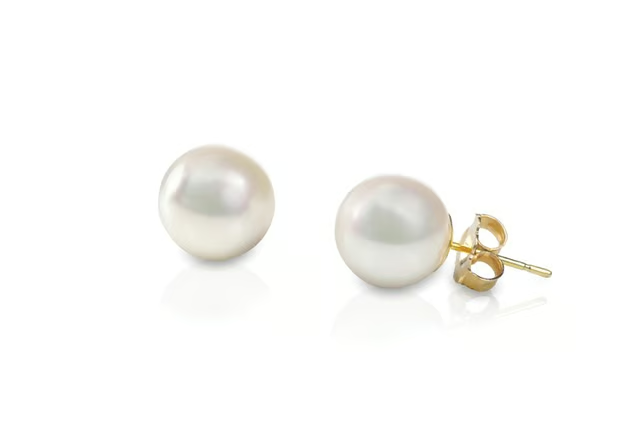
Earrings aren’t just a piece of jewelry — they are a fashion statement. They portray a message about who you are and what you like without even saying a word. The backs of your earrings also make a statement: They say “I’m really secure” or “be careful when wearing me” depending on which type of back they are. Read below to identify different types of earring backs and which ones to use on different earrings.
Push Backs
Push backs, also called friction backs, are the most common type of earring back. You secure earrings with a push back by simply sliding the back right up the earring post until the earring is firmly in place. Push backs are most often used for stud earrings or lightweight drop or dangle earrings. They are not very secure, so use care when changing or doing your hair while wearing push-back earrings. Push backs can be used in a pinch on almost any pair of earrings.
Screw On
If you want a little more security, opt for a screw back. Screw backs resemble push backs, but instead of a smooth post, screw back earrings have a grooved post that literally requires you to screw the earring back in place. Screw backs are often used on expensive varieties, like diamond studs or platinum earrings, or on children’s earrings because they are less likely to fall out.
Lever Back
The lever back consists of a curved piece of metal that goes through the ear and a metal latch that goes over the curved piece to hold the earring in place. Lever-back earrings are designed to fit perfectly on your ear to maximize comfort. This type of backing is most often used for drop or dangling earrings.
Related LeafTv Articles
Latch Back
Latch backs are generally used for hoop earrings only. Some latch-back earrings contain a hinged post that goes through the ear and then snaps into a notch on the other side of the earring to secure it into place. Other latch-back earrings have a post that doesn’t move. The post goes straight through the ear and then slides right into a hole on the other side of the earring to create a continuous loop.
French Wire
French wires are only used with drop earrings because they rely on the weight of the earring to secure it in place. The French wire is a curved wire hook -- often with the earring attached directly to the hook -- that slides right through the ear and hangs there. French wire earrings are also referred to as fish hooks. For added security, you can add a plastic earring back to the end of a French wire earring. These are simply plastic pieces that slide right up the post and secure the earring in place.
Clip Earrings
Clip earrings are for those without pierced ears. Clip earrings contain a clip on a hinge that latches onto the earlobe to hold the earring in place rather than securing through a hole in the ear. You may also opt for clip earrings for heavy costume jewelry pieces that could stretch or damage your ear piercing due to excess weight. Not having a pierced earlobe does not mean you can't wear exciting earrings though, so don’t shy away from any style of earring.
Hook Earrings
A hook earring is exactly what it sounds like. It will not have a separate piece to the earring to secure it, but will rather hook into your earlobe and hang there by itself. Many heavy earrings come with hook earrings, but sometimes have different back options that will add weight to the earring to balance it for the sake of your earlobes.
Where To Buy Them
Earring backs can be bought at your local jeweler, or online on sites like Amazon who sell many of them in bulk quantities. It really is up to the wearer to determine which earring back they like the most. Especially if you are hypoallergenic to earring metals, opt for sterling silver back options when shopping.