
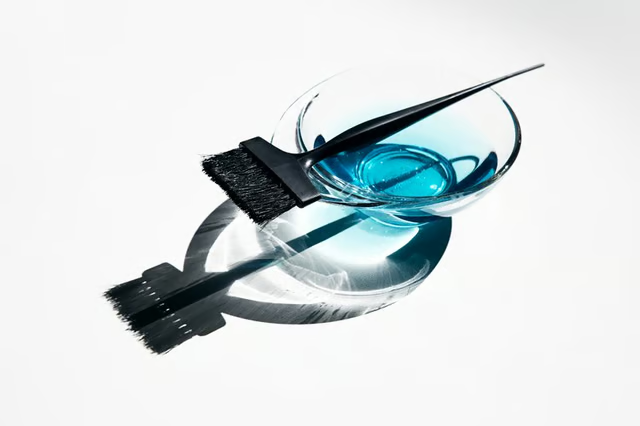
Changing up your hair color is definitely a fun way to play with your look, but it can also lead to regret. From permanent dyes to temporary tints, it's important to know your options and choose wisely to get the results you want.
The Difference Between Dye and Tint
Hair dyeing is a permanent process that lifts the original color of hair and deposits a new shade into the strands. Tinting, on the other hand, is temporary—it deposits color on top of the strands without lifting the original pigment.
As for ingredients, dyes may have more chemicals. They contain an oxidizing agent, such as potassium persulfate, or hydrogen peroxide, as well as ammonia as an alkalizing agent. The final color is made from a variety of synthetic coloring agents. Tints have a water or alcohol base mixed with synthetic coloring agents. If a tint is in the form of a styling product, like mousse, other ingredients are used, such as silicone for shine.
Results and Wear
Although hair dye is permanent, it may fade slightly or lose its luster. New growth needs to be retouched every four to six weeks. Since tints do not absorb into the hair shaft, the color molecules eventually wash away with shampooing. If a tint is applied to damaged, bleached or brittle hair, the porosity of the strands lets the color absorb deeper and last longer. A tint needs to be reapplied every two to four weeks for even coverage. Tints do not take well to gray hair, and the results may appear uneven or highlighted.