
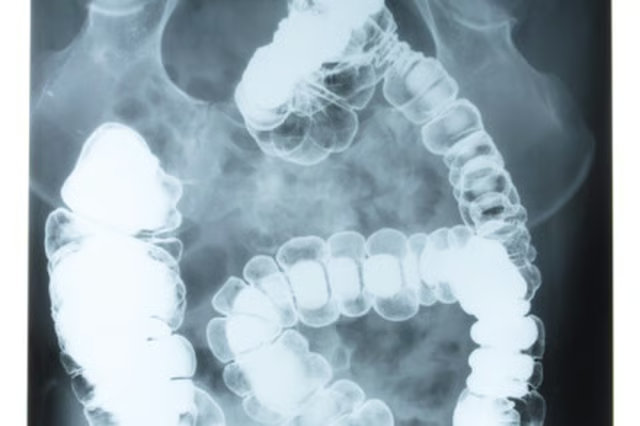
An impacted bowel, otherwise known as a fecal impaction, in children generally results from a period of constipation. Treating constipation is an important preventive measure. Infants up to 3 months old should have two or three bowel movements a day, infants up to 1 year old should have two bowel movements most days, while toddlers and children should have at least one bowel movement daily, according to the American Academy of Family Physicians. Fewer bowel movements indicates constipation. Once constipation becomes painful, children may stop trying hard enough to pass their stool.
Take children younger than 1 year old to your pediatrician for treatment of an impacted bowel, as the American Academy of Family Physicians advises. Permit the doctor to administer a glycerin suppository or perform an enema, as recommended.
Purchase a children's home enema kit from a pharmacy. Consult with your pediatrician about what type of enema fluid to administer to your child, and how much to use.
Explain to your child as well as possible why you must administer an enema. Prepare him for some discomfort. Instruct him to take deep breaths with forceful exhalations through the mouth if he feels the urge to have a bowel movement during the enema, explains the University of Wisconsin School of Medicine and Public Health.
Remove the enema kit from its packaging and carefully read all instructions and warnings.
Wash your hands thoroughly with warm water and soap. Remove your child's clothes and position him on his left side over a large clean towel, with his knees pulled up to his chest.
Remove the cap from the tip of the enema. Lubricate it with a water-soluble lubricant if it is not pre-lubricated, as the Cincinnati Children's Hospital recommends.
Test the enema fluid on your wrist to make sure it is at room temperature. Administer the enema exactly as instructed by the package directions, closely following all advice from your pediatrician. Different products have varying specifications.
Remove the enema once the procedure is completed as per the package directions. Have your child remain in the same position until he must pass the impacted stool, which generally takes about 2 to 5 minutes, according to Cincinnati Children's Hospital.
Throw away disposable enemas or follow package care instructions for sterilization.
Consult with your pediatrician to determine the cause of constipation for treatment and prevention of future fecal impactions. Detail your child's diet and typical bowel habits, as they are often responsible, says nurse and pediatric advice columnist Lisa Kelly on the website PediatricAdvice.net. Consider medical conditions that commonly cause constipation, such as celiac disease, hyperthyroidism, Hirschsprung disease, muscle and endocrine system disorders, as well as medication side effects.
Give your child a laxative if your pediatrician advises it, as prescribed, for the designated period following the enema to keep stools loose. Oversee dietary or other lifestyle changes the pediatrician recommends to prevent constipation from becoming an ongoing problem with your child.