
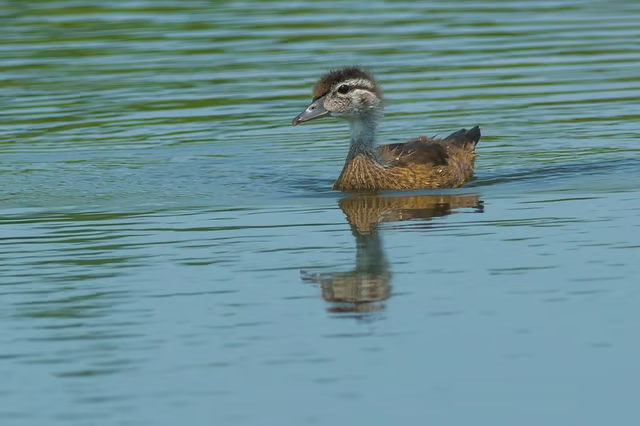


Wood ducks are colorful, brightly marked waterfowl that frequent wetlands, swamps, marshes and lakes. They are one of only a handful of North American ducks that build their nests in trees. Soon after hatching, the ducklings jump down from the nest and make their way to the water, guided by the mother duck's calls. A baby wood duck that has been orphaned needs to be cared for by a licensed wildlife rehabilitator. Your task will be to keep the duckling warm, clean and well-fed until you can get it safely delivered into the hands of experts.
Evaluate the baby duck's condition and circumstances before touching it or trying to remove it from its environment. If it is peeping loudly and running about vigorously, leave it where it is unless you know for certain that the mother has been killed. The mother is probably in the vicinity and is only waiting for your departure to approach the baby. Leave the area for at least an hour and a half. If you return after that time and the duckling is still in the same place, or if it is lethargic, silent or wet, it may be orphaned and might need help.
Contact a licensed wildlife rescue organization. The Center for the Rehabilitation of Wildlife notes that it is illegal to care for or possess wild birds, and trying to raise them can result in harm. Call your state's fish and wildlife service and ask for the number of the permit office; these offices keep phone numbers of local rehabilitators. You can also try a local branch of the Audubon Society, a veterinarian or an animal control office. You'll need to care for the duckling until you can find a center.
Dry the duckling off with paper towels if its downy feathers are wet, and place it under a heat lamp to finish drying. Make sure the lamp is positioned far enough away from the duckling so that it is not uncomfortably hot. The Center for Rehabilitation of Wildlife advises that it takes several weeks for baby ducks to produce vital waterproofing oils in their feathers, and that parents, by sitting on the ducklings, transfer the oil from their own feathers. An orphaned duckling that becomes soaked and chilled at an early age can die from the complications.
Place the baby duck in a 10-gallon fish tank--or a sturdy cardboard box of the same size--lined with clean cotton rags or T-shirts. Don't use terrycloth towels; the duckling may catch its claws on the fabric. Make sure the box has a secure cover with breathing holes, and place it in a warm, quiet location that is free of drafts. Bird Care recommends wrapping a hot water bottle in a towel for extra warmth, but make sure the duckling can move away from it if it is too hot.
Offer finely shredded vegetables such as carrots or kale mixed with chicken starter feed--available at farm supply stores--combined with enough water to make a paste. Wood ducks are precocial, which means they can eat unassisted as soon as they are born. You can also give the duckling live mealworms, available at pet stores. Duckweed, scooped from a local pond, is an ideal offering if you can get it.
Provide drinking water by setting a shallow dish in the duck's box. Place smooth pebbles in the dish to prevent the duck from climbing in and getting wet.