


Silymarin is good for your liver. It helps the liver in four ways: It repairs damaged tissue, it lowers bad enzymes, it boosts good enzymes and it protects the liver from further damage. Silymarin has also been identified as a cancer preventative--especially effective in warding off skin and colon cancers. It is usually taken as a pill or powder but it can be found in some unusual edible plants.
Milk Thistle
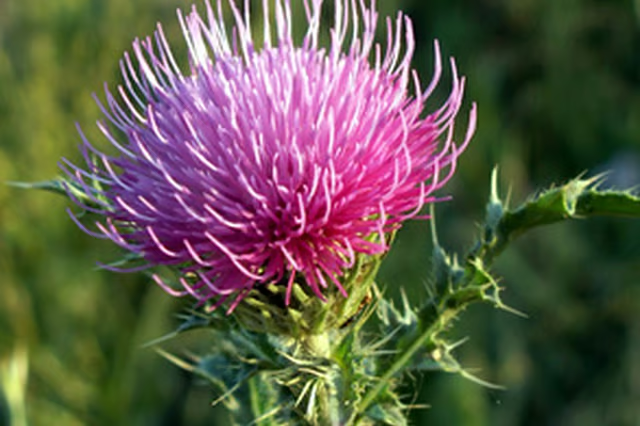
Milk thistle (Silybum Marianum) is the major source of silymarin. All parts of the plant contain silymarin with the seeds containing especially high levels. Medical silymarin is extracted from milk thistle seeds. The sprouts and young stems are eaten in many parts of the world--especially in Mediterranean countries. The adult plant is a thorny plant with a purple thistle and is considered a weed in most parts of the world. On North American farms it is a constant target of pesticides, which are themselves a major source of liver toxins. Silymarin is present in most members of the thistle family but nowhere else in the high concentrations found in milk thistle.
Artichokes
The most common food source of silymarin (besides milk thistle) is artichokes (Cynara Scolymus) which is also a member of the thistle family. A much rarer member of the thistle family is cardoon (Cynara cardunculus) which is also known as artichoke thistle or wild thistle. This plant provides a common salad ingredient in Arabic countries. Jerusalem artichokes (Helianthus Tuberosus) do not contain silymarin. Despite the name, Jerusalem artichokes are not related to true artichokes and are not a member of the thistle family--they are actually closely related to sunflowers.
Silymarin from Spices
Several spices contain silymarin--mostly spices that are unknown outside of Arabic countries, Southeast Asia and Brazil. Turmeric and coriander both contain silymaric. Turmeric is a yellow-orange power that is used in curries and some southeastern dishes. It also shows up in some Mexican dishes such as Arroz con Pollo. Coriander (aka Chinese parsley) is an herb that is eaten raw in many Thai and South American dishes (where it is known by its Spanish name: cilantro).
Other Sources
Trace amounts of silymarin are found in eclipta (Eclipta Prostrata)--a weed that grows in Southeast Asia and Brazil. There are also trace amounts in grapes, beet greens, peanuts, brewer's yeast and berries. It is a common "added ingredient" in bread products found in health food stores. The roots and rhizomes of the black cohosh (Actaea Racemosa) also contain small amounts of silymarin. This plant was called squawroot by Native Americans and was used to relieve menstrual cramps.