
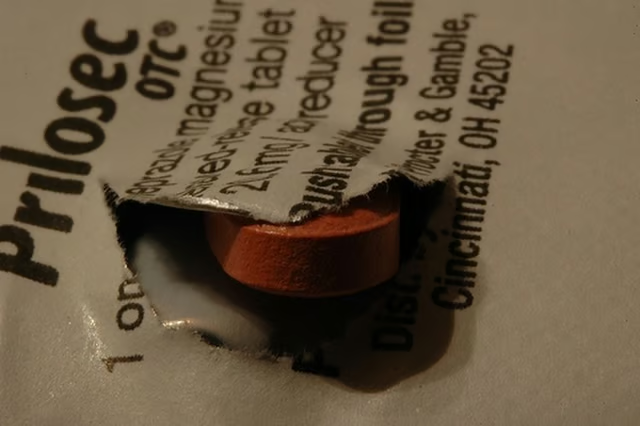
Prilosec (omeprazole) was introduced in 1989 and Prevacid (lansoprazole) was introduced in 1995. Both are equally effective proton pump inhibitors which treat gastroesophageal reflux disease (GERD), stomach and intestinal ulcers and gastrointestinal bleeding. They reduce acid secretion in the stomach and protect the stomach against the harmful effects of non steroidal anti-inflammatory (NSAID) medicines such as ibuprofen. Prilosec has a longer history of safety data and is available without a prescription.
Importance of Treatment
Between a quarter and a third of Americans have heartburn (GERD), and 10 percent have daily symptoms. Inflammation in the esophagus as a result of GERD can lead to the development of esophageal cancer. Other consequences include a perforated ulcer, blood transfusions, bleeding, and death.
Practical Information
Prilosec OTC and generic alternatives are available without a prescription in the United States, while Prevacid requires a prescription. Prevacid is taken as a single 15 to 30 mg dose once a day, and Prilosec is taken as a single 20 mg dose once a day.
Either medicine is taken for at least two weeks, usually under the care of a physician in a patient diagnosed with heartburn, ulcer or at risk for these conditions. Neither medicine immediately treats heartburn symptoms.
As of September 2006, a month's cost for Prilosec OTC is $19-26; in comparison, Prevacid costs $131-186. If covered by your prescription drug insurance plan, the co-pay may be less than $10 per month.
Effectiveness
Prevacid (30 mg taken once daily) relieved symptoms in 70% of patients at four weeks. After eight weeks, 86% of patients had resolution of esophagitis and 91% of patients had no relapse after stopping the medicine. Prilosec (20 mg once daily) had similar outcomes against placebo controls.
Multiple trials comparing Prevacid and Prilosec found no significant difference in heartburn symptom relief or ulcer healing. Although fewer comparisons have been performed, there is little difference in the ability of Prevacid or Prilosec to prevent ulcers in patients taking NSAIDS.
Safety
In adults, 1-3% of patients taking either medicine experienced minor adverse effects such as diarrhea. No trial has directly compared the safety of these two medicines. More serious effects of either medicine include increased rates of pneumonia, clostridium difficile infection, and hip fractures. Combining either medicine with clopidogrel (plavix) was found to increase the risk of death or readmission to the hospital for patients taking the medicine after a heart attack.
A study of 295 pregnant women exposed to Prilosec and 62 exposed to Prevacid showed no increase in the rate of major birth defects or pregnancy complications.
Alternatives
Other treatments include neutralizing antacids which provide immediate relief such as Maalox, selective nonsedating antihistamines such as Zantac (ranitidine) or Pepcid (famotidine), newer proton pump inhibitors such as Nexium (esomeprazole) or Protonix (pantoprazole), and stomach surgery (Nissen fundoplication).