


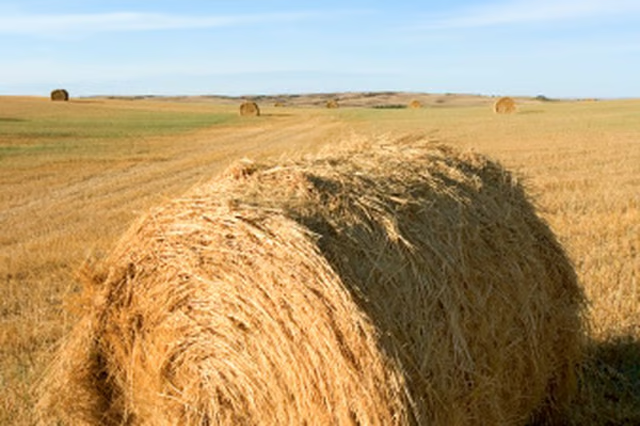
A pile of hay makes an inviting home to rodents and a variety of insects. Warm, moist areas inside the pile or bale invite some species, while the dry, outer layers invite a host of other species. An allergy to hay may appear on the skin as a rash resembling bug bites; but, chances are, some sort of mite, fly or spider has bitten you.
Straw Itch Mites
The most common pest associated with hay is the straw itch mite. This pest breeds in stored grain, dried beans and peas, wheat straw, hay and other dried grasses. Although a nuisance to humans, straw itch mites are beneficial because they feed on insects that would otherwise destroy stored commodities. The presence of straw itch mites typically indicates the presence of a host insect. Riding the area of the host insect with pesticides can help reduce the number of straw itch mites in the area.
Chiggers
Chiggers are tiny, reddish mites that feed on humans and animals during the larval stage. This mite does not burrow into the skin but remains attached to the skin for several hours up to several days. The bite causes itching within three-to-six hours. People who are allergic to chiggers develop blister-like lesions. Chiggers prefer to live in areas that contain thick layers of straw, hay, pine needles, shrub thickets and unmowed lawns. Clover mites appear in spring and often mistaken for chiggers, but they do not bite.
Biting Stable Flies
Biting stable flies look much like the common house fly, except they have a needle-like, piercing mouth part. This fly feeds on blood from people, cattle and horses. They often bite through clothing but do not feed at night. Female stable flies lay 40-to-80 eggs at a time and 10-to-12 times during their life. Females deposit eggs in straw, chicken manure, compost piles, wet hay bales and grass clippings. Stable flies overwinter in the same substrates as larvae or pupae.
Fleas
Fleas love pets and livestock, even in the winter. Fleas are able to survive the winter in bales of hay and straw. Placing hay inside a doghouse gives Fido exposure to fleas all year round. Using pesticides to treat dogs for fleas in not a healthy solution, it is best to not use hay to insulate a doghouse, and don’t let your dog in the barn or where hay is located during the winter. This gives your dog a break from pesticides.
Widow Spiders
North America is home to five species of widow spiders. The western black widow is velvety black with a marking of white, red or yellow on the back of the abdomen. This species is associated with piles of firewood, old lumber, dry crawl spaces, outbuildings, rock piles and bales of hay. The bite of a widow spider goes unnoticed initially, but severe pain occurs following a reddening and swelling at the bite site. Rigidity of the abdomen and legs, difficulty in breathing and nausea should subside in two-to-three days. An injection of calcium gluconate provides pain relief. Children and elderly should see a doctor.