
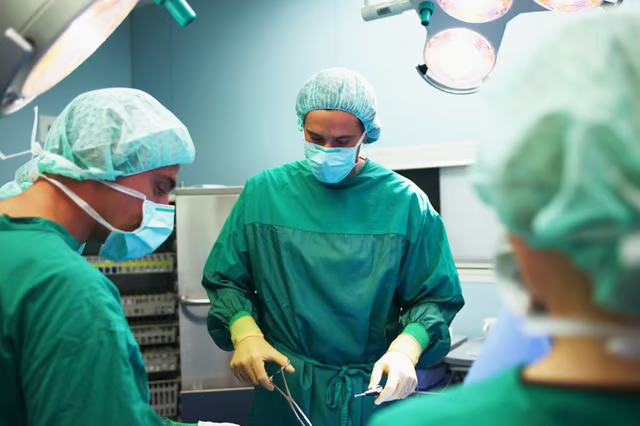


Surgery can, at times, perform "miracles." Surgeons are able to make amazing repairs on the human body. However, surgery's invasive procedures can also be hard on the body. Recovery time varies, depending on the procedure and how extensive the work. Because the body uses what is consumed as fuel for rebuilding itself, it is important to get proper nutrition. In treating the body after surgery, some vitamins, nutrients and even herbs may help.
Nutrients
Zinc, along with calcium and magnesium, are important nutrients for tissue repair. The amino acid L-cystine also helps speed the healing of wounds. A protein supplement for free-form amino acids helps in collagen synthesis and therefore helps heal wounds. These amino acids are easily absorbed and assimilated. Coenzyme Q10 is a free radical destroyer that improves tissue oxygenation. Dr. James F. Balch, author of several nutrient healing books, recommends daily dosages of: 60 mg of Co-Q10, 80 mg zinc, 1,500 mg calcium, 1,000 mg magnesium and 500 mg twice daily of L-cystine.
Vitamins
Balch also recommends a full regiment of vitamins A, C, E and K. He suggests a multivitamin complex with beta-carotene and A because vitamin A is needed for protein utilization--meaning it aids in tissue repair. He recommends high doses of vitamin C (up to 10,000 mg over multiple doses). Vitamin C aids in tissue repair, thus helping wounds to heal. Vitamin C is also vital in immune function, and after surgery, infection is always a risk. He suggests taking vitamin K as recommended on its label. Vitamin K is important in blood clotting. For natural sources, eat alfalfa, blackstrap molasses and leafy green vegetables. Vitamin E can be applied directly onto the incision--once the stitches or staples have been removed and the wound is no longer open. Vitamin E oil can be taken from the capsule or purchased as an oil. Applied to the healing wound, it will promote healing while reducing scar formation. Balch cautions not to take vitamin E supplements the week before surgery as vitamin E thins the blood. He adds to resume taking vitamin E the day after surgery.
Additional Supplements
Because infection is a risk after surgery, consider adding in garlic (kyolic). Kyolic is a natural antibiotic which enhances the immune system's function. Other herbal supplements reputed to strengthen or boost the immune system include echinacea and goldenseal. Pau d'arco and rose hips are also recommended for after surgery. Another potentially helpful nutrient is acidophilus as it can stabilize intestinal bacterial flora.