
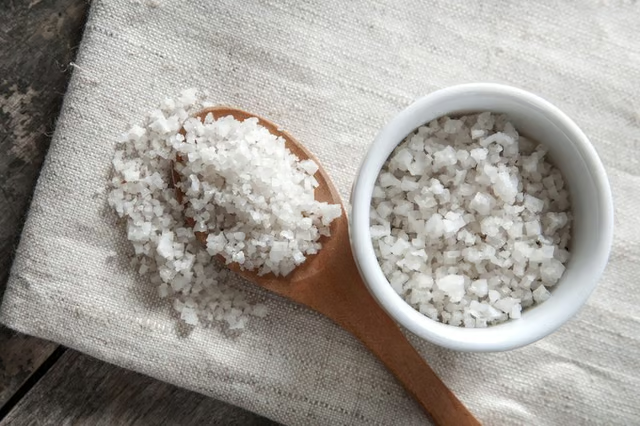
All salts are the same, right? What could make the sea salt I use in the kitchen so different from the Dead Sea salt perched proudly on the skincare shelves of my local natural market? It turns out that scores of chemical differences set the two apart, making one perfect for pasta and the other a potent skin-healing tool.
Geography
The Dead Sea lies on the border between Jordan and Israel. Evaporation has shrunk the body of water over the past 10,000 years much faster than the rains can replenish it, leaving behind vast, concentrated salt deposits.
History
There is a long history of therapy-seekers heading to the Dead Sea for treatments--in fact, the Roman historian Flavius wrote about its healing properties as long as 2,000 years ago.
Chemical Composition
The concentration of salt in the Dead Sea is 10 times that of ocean water (33 percent as opposed to just 3 percent). The Dead Sea salt is also much richer in mineral compounds, possessing high concentrations of magnesium, potassium, calcium chlorides and bromides.
Features
Just 12 to 18 percent of Dead Sea salt is sodium chloride, the salt we use to flavor food. "Regular" sea salt is 97 percent sodium chloride. As a result, you can't put Dead Sea salt on fries; the high mineral concentration and low "table salt" content makes it taste bitter.
Function
The main uses of sea salt are culinary, whereas the main uses of Dead Sea salt are therapeutic. Folks suffering from a range of skin irritations and rheumatic disorders purchase products manufactured from its salts for home use (or, if they're lucky, they travel to Israel to bathe in it directly).